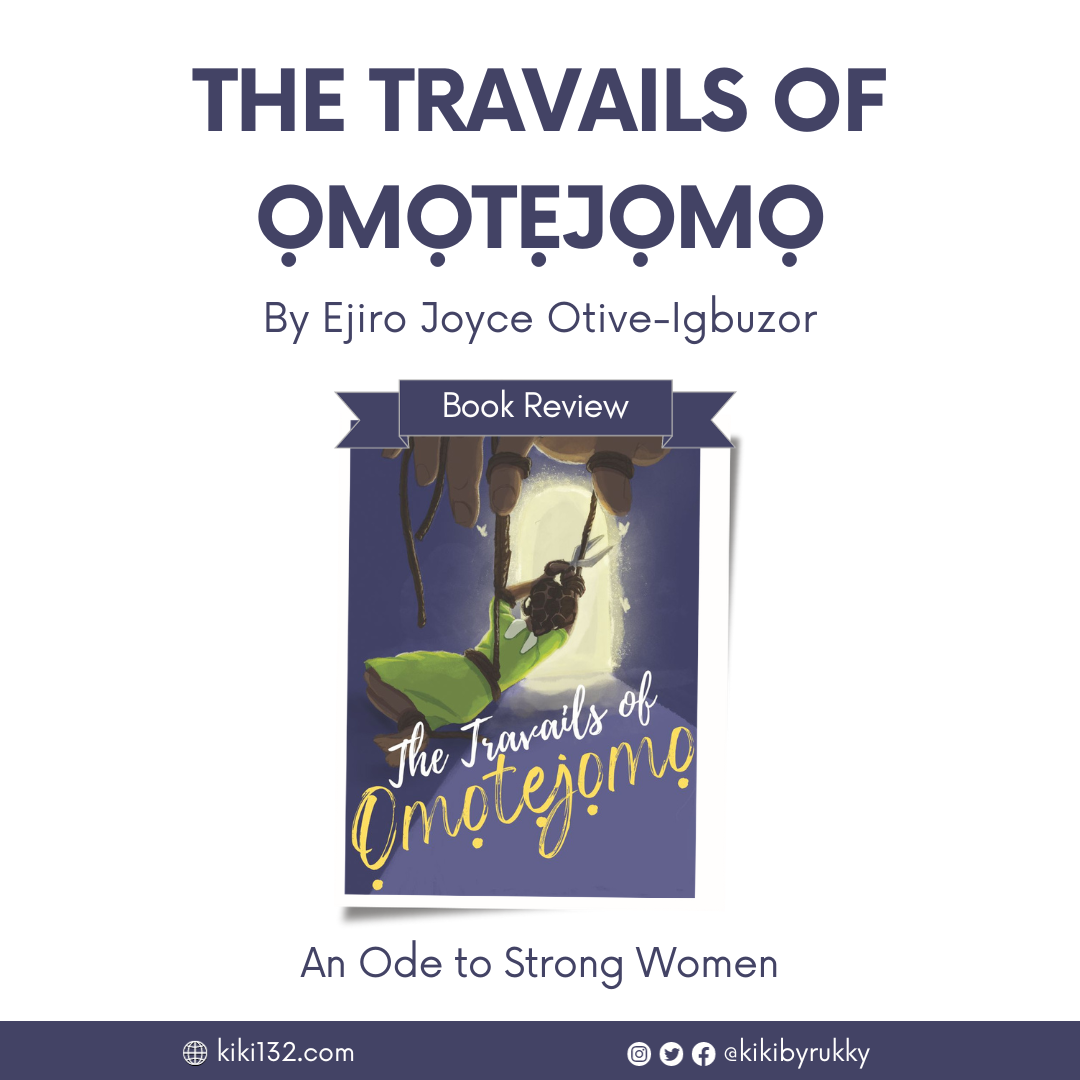
About four months ago, my mum, Dr Ejiro Joyce Otive-Igbuzor, published two books: The Travails of Ọmọtẹjọmọ and Trophy Husband. I have read both books multiple times, and each time I read them, I find something new to talk about. So, it has taken me this long to properly formulate my thoughts in order to write a review. I will start by reviewing The Travails of Ọmọtẹjọmọ, and in a future blog post, I will review Trophy Husband.
I was originally going to tag this review “An Ode to the Girl-Child”, but after reading the book again, I thought “An Ode to Strong Women” was more fitting. Since the story is told from a third-person point of view, the omniscient narrator allows readers into the lives of not only Ọmọtẹjọmọ but also other women in the story – notably Kọkọ, Kohwo, and Ufuoma.
Jọmọ: Dogged Ambition Against All Odds
With the word “travails” in the title, you can already tell that a bumpy ride awaits the protagonist, Ọmọtẹjọmọ (Jọmọ for short). In the book’s first chapter “Baby Girls Don’t Bounce”, readers are taken back to the moment of Jọmọ’s birth, when what should have been a joyous moment turned into disappointment simply because the child was born a girl – the fourth daughter in a row. Jọmọ’s name, which means “A girl is nonetheless a child” (18), illustrates this point clearly. This first chapter sets the tone for the rest of the book, as Jọmọ navigates trying to pursue her ambition in a patriarchal society that devalues girls.
In Chapter 3 “The Breakthrough”, the narrator says,
She could hear her dad’s voice chiding her for being ‘forward and wild’. Yes Papa, I learnt from the best. Whose genes do I have in me though? She was defiant. (29)
The words “forward”, “wild”, and “defiant” fully capture Jọmọ’s persona. Her dogged ambition is noticeable even as a young student in the village, when she takes matters into her own hands to ensure that she writes the West African Senior School Certificate Examinations. One might question her methods, but it is the inevitable result of trying to pursue your ambition when all the odds are stacked against you.
Frankly, it was hard for me to read the book at first. I was frustrated and annoyed. It seemed like too many things were happening to one person. Even when it seemed like Jọmọ had finally broken the chains that had kept her bound in the village, life happened to her again. I thought to myself, “Can’t this babe catch a break?”
But that is exactly the point. As the narrator put it starkly, “Life is cruel for a girl” (31). Jọmọ is the embodiment of the girl-child. When you consider that almost 1 in 3 women around the world have experienced sexual and gender-based violence, nearly 4 in 10 young women in West and Central Africa have been subjected to child marriage, and at least 200 million girls and women alive today have undergone female genital mutilation, it is evident that Jọmọ’s experience closely mirrors reality.
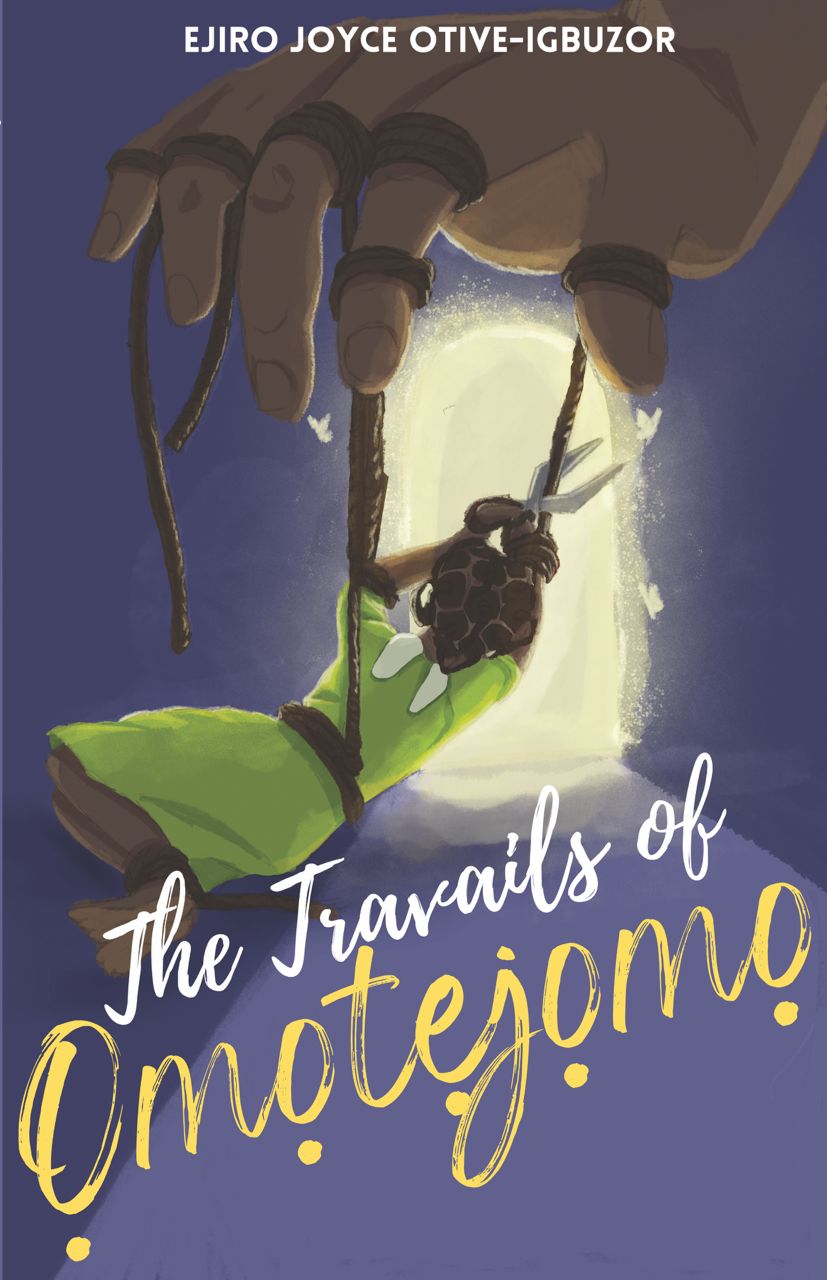
Nevertheless, as the front cover of the book graphically illustrates, Jọmọ is eventually able to escape the hands (the patriarchal hands, if you will) that keep her bound, and she forges toward the proverbial light at the end of the tunnel. While Jọmọ’s dogged ambition plays a crucial role in her journey, the impact of the other strong women in her life – Kọkọ, Kohwo, and Ufuoma – cannot be discounted.
Kọkọ: The Quiet Strength Behind Jọmọ’s Ambition
Kọkọ, Jọmọ’s mother, is a lot less assertive than her daughter. The narrator describes her in Chapter 6:
Unlike Kohwo, her mum Kọkọ had always been cowardly. Her greatest ambition in life was to be the obedient wife who says yes to everything that Ọga says. (41)
Kọkọ’s “cowardly” nature directly contrasts the assertiveness of her daughter. Whereas Jọmọ’s ambition is to be a medical doctor, Kọkọ’s ambition is to be an obedient wife. And can you blame her? Kọkọ was probably socially conditioned in the tiny village of Uke to aspire to be a submissive wife and nothing more. She also did not grow up in the same environment as her daughter, with resources such as the Violence Against Persons (Prohibition) Act, which, according to the story, had already been passed by the time Jọmọ was in secondary school.
But I wouldn’t dismiss Kọkọ so easily. When Jọmọ’s father, Jite, refused to buy textbooks for her, it was Kọkọ who raised the money to photocopy the smaller ones (52). When Jite lost his job, it was Kọkọ who was responsible for putting food on the family’s table and even sold some of her wrappers to pay some bills (17). When Jọmọ’s West African Senior School Certificate Examinations were approaching, Kọkọ was even willing to sell her wrappers to pay the registration fee – if only she had any good wrappers left (25).
A pivotal moment is when Kọkọ goes to consult with her sister Kohwo to save Jọmọ from another one of Jite’s machinations, because Kọkọ finally decides, “I need my voice back” (42). In these small ways, we see how Kọkọ shows resilience in a world that tells her to keep shut. Although her strength is portrayed less prominently than that of the other women in the story, it is evident that she too played a crucial role, especially in supporting her daughter, despite the patriarchal context in which she lived.
Kohwo: A Defiant Spirit in a Conformist Society
Kohwo – Ọghẹnẹkohwoarhọ, alias Kohwo for show (38) – is Kọkọ’s sister and Jọmọ’s aunt. From the first chapter, Kohwo’s assertiveness is established, as she defends her sister from Nene’s scornful remarks. Kohwo is described as a “non-conformist” (49) and someone who is “ahead of her time” (37).
Chapter 5, titled “Yanga Tolotolo”, is dedicated to Kohwo. “Yanga” is a slang that means “to show off”, and “tolotolo” means “turkey”. So, “yanga tolotolo” essentially refers to someone who shows off like a turkey. This description portrays Kohwo as a charismatic woman – one who exudes confidence in everything she says and does.
Jọmọ clearly got her defiance from Kohwo, as Kohwo herself recognises, saying, “I see that you took your genes from me” (56). But outside her relationship with Jọmọ, Kohwo also has a rich story of her own:
She completed Model School and really wanted to go for further studies but her parents blatantly refused. They forced her to marry a palm wine tapper whose greatest credential was that he tapped the best palm wine in the village. (37)
It is interesting to see how even with Kohwo’s defiant nature, she was still caught in the patriarchal web by entering into a forced marriage. But like the other strong women in this story, she was able to fight the system. After the palmwine tapper’s death, Kohwo raised the money to refund her bride price and get her freedom (40). In so doing, instead of being subjected to the barbaric practice of wife inheritance, she was finally able to marry her beloved, Ọchuko.
For Kohwo, “supporting Jọmọ was her own way of avenging the injustices done to her as a child” (37). She sold her gold earring and necklace to pay Jọmọ’s JAMB fees, and she arranged for Jọmọ to escape child marriage. There is something to be learned in how Kohwo supports Jọmọ to escape the same fate she experienced.
Ultimately, Kohwo is a force to be reckoned with, and it is incredible that she was able to maintain her assertiveness despite the context in which lived.
Ufuoma: Empowered yet Entrapped
Ufuoma, Ọchuko’s cousin, is a lecturer at the University of Ibadan who facilitates Jọmọ’s admission to study medicine in the university. Ufuoma is very different from the three characters discussed above: She is a city woman who is highly educated and doing well for herself careerwise. But she too faces her own challenge: an adulterous, abusive husband.
It is interesting to me that Ufuoma, who lives in a different context from the other women and clearly has more resources at her disposal, is still sucked into the same patriarchal system that oppresses women. In fact, the well-educated Ufuoma was almost subjected to barbaric widowhood practices, if not for her family members who stood by her. This is a testament to how deeply ingrained patriarchy is, even though it might manifest differently in different contexts.
As a side note, Chapter 15 “The Blood-Sucking Gods” is my favourite chapter in the entire book. The chapter is written in a way that allows readers to see Ufuoma’s rage build until the very end of the chapter, where she does something that I did not see coming at all!
Overall, Ufuoma is a very strong character who demonstrates immense wisdom and resilience. She plays a pivotal role in Jọmọ’s life, helping her to achieve her dreams while fighting her own battles.
Patriarchy: A Closer Look at the Intricate System
Having considered the strong women in the story, I would like to make some remarks about the complexity of the patriarchal system. The concept of patriarchy is quite broad and subject to various interpretations, but at its heart is the idea that power and authority are concentrated in the hands of men to the exclusion of women.
However, patriarchy is not simply a case of women versus men. Nene and Nurse Erhiori, for example, were fellow women oppressing other women by perpetuating the patriarchal system. When Ufuoma’s husband died, it was the women’s group who planned to “show her pepper” (225). Conversely, men such as Tega and Ọchuko played crucial roles in supporting Jọmọ. Notably, Ọchuko was also one of Ufuoma’s fiercest advocates when the women’s group was trying to subject her to harmful widowhood practices. (Let’s be clear, though: I am not exactly a huge fan of Ọchuko because of what he did to Kohwo, but there is no scope in this blog post to delve into that discussion.)
In the end, it is not a case of saying that men are the attackers and women are the victims. Patriarchy is more intricate than that. Just as both men and women can advocate for feminist principles, both men and women can also perpetuate the patriarchal system. This is why dismantling the patriarchy is not a job for only the feminists, or only the women. Everyone has to get on board.
Conclusion: The Strength of a Woman
The Travails of Ọmọtẹjọmọ excellently showcases the strength of a woman. Although the story revolves around Jọmọ, other women – Kọkọ, Kohwo, and Ufuoma – also go through their own “travails”. Together, these women strive to conquer despite the limits of the patriarchal world in which they live.
As a reader, you will sometimes get angry. But I think that is exactly the kind of reaction the author seeks to evoke. Readers can however take solace in the fact that after everything the four characters go through, they all get some sort of a happy ending. This is more than we can say for many women, who continue to face harsh realities.
Jọmọ was set up for failure from the beginning, but with the influence of the strong women around her and tapping into the resources at her disposal, she was able to fulfil her ambition. In the end, she becomes a role model to others; the statement “I want to go to school like Jọmọ” (252) illustrates this point strongly.
From my perspective, the book is a tale of sisterhood and intergenerational solidarity. In a broader sense, it serves as a wake-up call for all of us to protect and empower the girl-child. To get a copy of the book, click here.
Enjoyed this post? Hit the ‘Subscribe’ button below to get notified of new posts via email!
Email’s not your thing? I gatchu! Follow this blog on social media: @kikibyrukky.
Discover more from KIKI
Subscribe to get the latest posts sent to your email.


Thank you Kiki for an excellent review. You have taken us through the story whetting out appetites and capturing the true essence of the story, the patriarchal system, its depth and intricacies, the résultant forms of gender based violence and a story of bravery and conquest as these women overcome against all odds.
Bravo!
LikeLiked by 1 person
Thank you! Glad you enjoyed it.
LikeLike
The review is great I can’t wait to read the book. I just placed an order
LikeLiked by 1 person
Glad to hear that! 🙂
LikeLike
Excellent review as usual
LikeLiked by 1 person
Thank you!
LikeLike
👏🏾👏🏾👏🏾👏🏾👌🏾 well done Rukevwe
LikeLiked by 1 person
Thank you!
LikeLike