
Picture this: It’s an uneventful day in your family home in Abuja, Nigeria, and you are watching TV and scrolling mindlessly on Facebook. While waiting to begin the Bar II programme at the Nigerian Law School, you had been casually exploring opportunities for master’s programmes. Facebook, with its vigilant algorithm, clearly picks up on this, as it shows you a well-placed targeted ad for Erasmus Mundus joint master’s programmes in Europe. That was what happened to me in October 2021.
I had heard the term Erasmus before. The extent of my knowledge was that it involved some kind of higher education exchange programme for nationals of the UK and other European countries. But this ad suggested that the programme was open to nationals of other countries as well. I decided to explore further, reading the eligibility requirements and browsing through the catalogue.
It didn’t take long before I decided that the Erasmus Mundus Human Rights Policy and Practice (EMHRPP) programme would be a good fit for me. I bookmarked the link and added it to the list of programmes I would apply for. While LLM programmes were already on my radar, the EMHRPP programme was the one that got me really excited. I get to study human rights from a multidisciplinary perspective, in different countries? Count me in!
After a long wait, on 31 March 2022 I was notified of my acceptance into the programme. I was ecstatic! The programme would start in August 2022 and last for two years, with semesters in Sweden, Spain, the UK, and potentially Norway. I started to imagine what the next two years of my life would look like. This was just the adventure I needed after the intensity of the Nigerian Law School. Yes, I would still be studying, but the prospects of travelling to different countries, meeting new people, and exploring new environments were more than enough to make me excited.
Fast forward to September 2022. I wrote my last paper in the Bar finals on 3 September, and that same evening, I dashed to the airport to catch my flight to Sweden. I was already two weeks late to join the programme, as I had to finish writing the Bar exam before leaving. I was overwhelmed with multiple emotions that day and, indeed, that entire week, as evident in my relocation vlog. On my way to the airport, I jokingly posted a meme that said, “Welcome to a new dispensation”. With hindsight, it was indeed a new dispensation for me.

Semester 1: University of Gothenburg
The first semester in the EMHRPP programme was in the University of Gothenburg, Sweden. I fumbled my way through the chaos of unpacking, buying the essentials I needed for my new flat, finding my way around the city, registering for my classes, and meeting my coursemates. In my characteristic self, I got lost on my very first day…and multiple times afterwards. But I eventually settled in and quickly got used to life in Gothenburg.
For me, one of the best parts of living in Gothenburg was the accommodation. Having experienced London student accommodation as an undergrad, I was pleasantly surprised when I saw my flat in Sven Brolids Väg. It was relatively spacious (especially when compared with the tiny cubicles in London), had a massive US-style refrigerator, and cost literally less than half the price of an average studio in London. What more could I want?
My coursemates and I also lived really close to each other, as we were allocated flats in the same group of buildings, and we frequently went to and from classes together (even when we didn’t plan it, because we would run into each other at the tram stop). We occasionally had group dinners in each other’s flats, and we quickly became close friends. During my time in Sweden, I also visited Stockholm (with a small group) and Alingsås (as part of a larger group activity). At some point, I joked that I was more of a tourist than a student. I was living my best life.
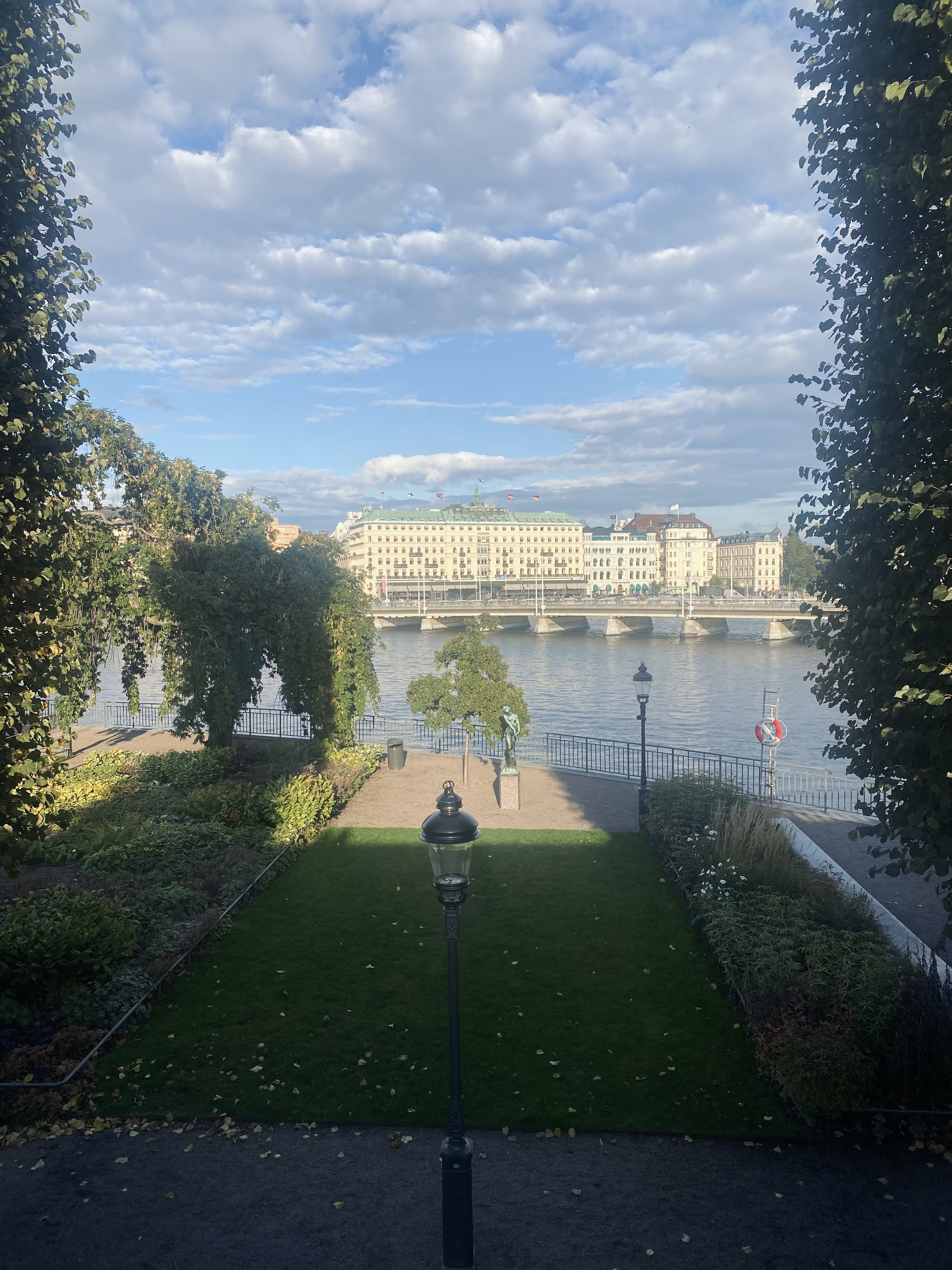
Stockholm
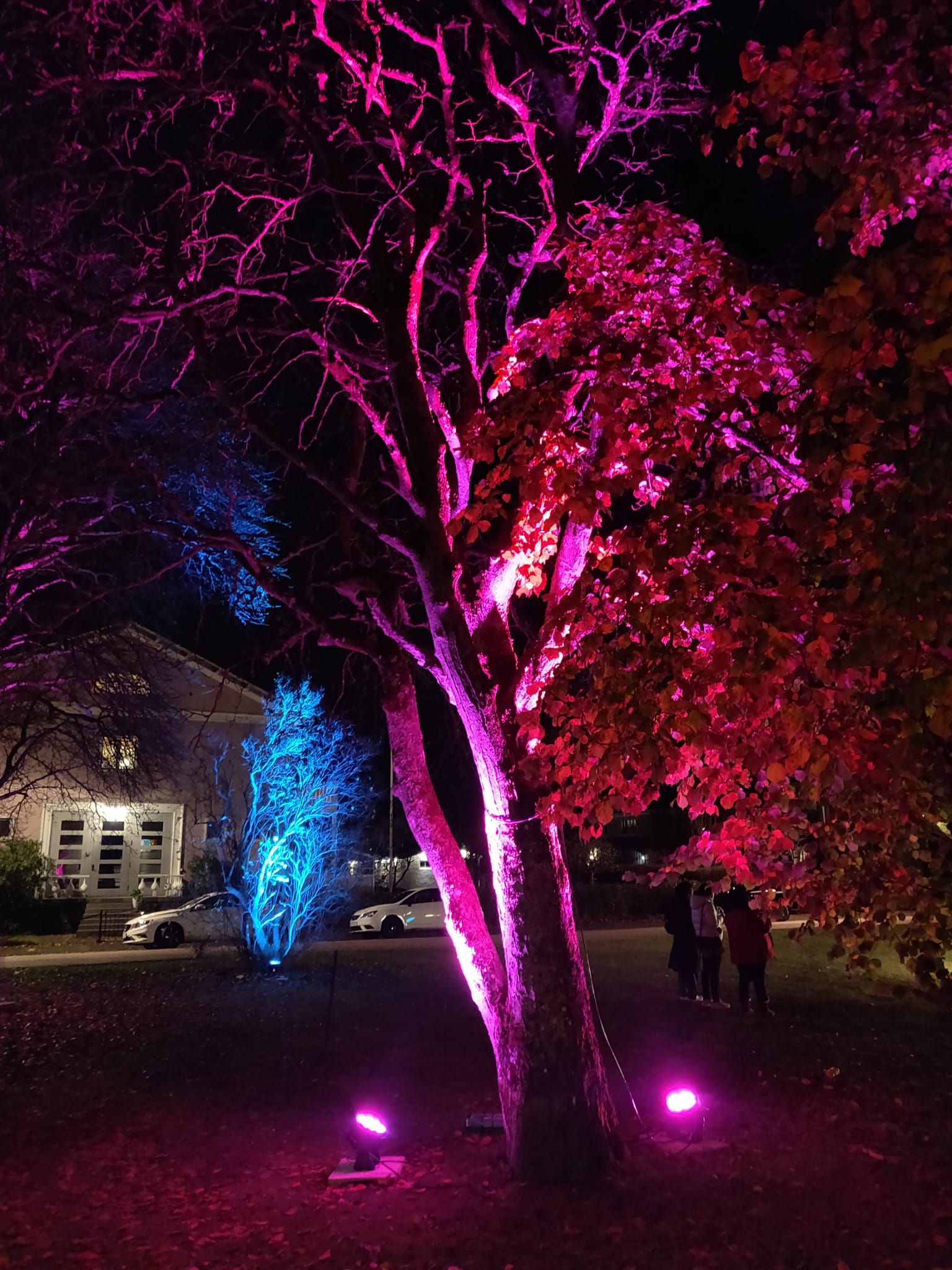
Alingsås
But, of course, I did not neglect my studies. We took two modules in Gothenburg: “Human Rights as an Interdisciplinary Field” and “State, Market, and Human Rights”. While the structure of our studies varied from time to time, it mostly involved lectures and seminars a few days a week (never the entire five days). The classes were typically from 10:15 to 12:00 or from 13:30 to 15:00. We hardly (if ever) had more than one class per day.
Lectures were based on pre-assigned readings, with the lecturers presenting and often leaving time for group discussions. Meanwhile, for the seminars, we were assigned to groups at the start of the semester, and each seminar came with pre-assigned readings and questions to guide the discussions. Prior to the seminar, we would have self-organised meetings in our groups, at the end of which we would submit a written work in response to the guiding questions. The written work was informal (bullet points were allowed) and graded pass/fail – it was just meant to show that we participated in the discussion. It was during the actual seminars that we would have wider-group discussions in response to the readings and questions.
Then, we had a series of assignments, which were mentally draining, but I felt fulfilled after I completed them (one of the assignments even inspired me to write this post on women versus culture). Overall, the modules in Gothenburg were engaging and very well organised. It made me remember just how much I enjoyed academic research and writing (a nice transition from the course at the Nigerian Law School, which was very much focused on legal practice).
When I started to get sick of Gothenburg was in January 2023. The weather had already started to get too cold for comfort before I left in December 2022 for my call to bar ceremony in Nigeria. When I returned to Gothenburg in January, it was colder, and darker. With the sun setting before 16:00 and the temperature dropping to -3°C, I was very much ready to get out of there. I mean, it wasn’t too bad, because I was very busy with my assignments and my part-time remote job, but I was still happy to leave the gloomy weather. I had gotten everything I needed out of the Gothenburg experience. I do think I would have had an even better experience in Gothenburg if I had been there during the peak of summer, but I still enjoyed the few months I spent there.
Semester 2: University of Deusto
I moved to Bilbao, Spain on 28 January 2023 to start the second semester in the University of Deusto. I was super excited for yet another exciting move in this two-year adventure. I’ve said it before, and I’ll say it again: Living in Bilbao was one of the best times of my life! The picturesque setting, the food, the people, the weather, the low cost of living – all spectacular. Give me 14 of them right now!


Views from Bilbao
Unlike in Sweden, we were not all assigned student accommodation in the same group of flats in Bilbao. Instead, most of us stayed in shared flats with around 3–5 rooms, which we found through the University of Deusto’s accommodation management platform. Some shared the same flat, while the rest shared a flat with other exchange students at the university. Although the flats were not all in the same location, Bilbao is a relatively small and walkable city, so it was not hard to meet with each other outside of classes. In fact, I think we forged closer friendships during the Bilbao semester, as we continued to have little get-togethers and group dinners.
A key defining moment was when we started taking Spanish classes. They were optional and not at all a requirement for the programme, which was entirely in English. But most of us were excited to take the classes so we signed up. We were divided into groups based on our Spanish-speaking skills (which were determined based on an initial assessment), and those Spanish classes became a hub for many memories that I continue to hold dearly. Our entire cohort embraced the Spanish language so much so that we began adding ito/ita to our names (so, for example, Rukky became Rukkita) and integrating Spanish words such as hola, gracias, and chico/chica into our regular conversations. Although my Spanish-speaking skills were still quite limited, I was able to get by with a few basic Spanish phrases (and if you watch my Spain vlogs, you’ll hear me say hola chicos many times, which was one of my favourite phrases to use).
During my time in Spain, I went on a proper tour of Bilbao, learning about the city’s rich history and visiting landmarks such as the Arriaga Theatre, the Arenal Kiosk, Plaza Nueva, Plaza Unamuno, and the Ribera Market. At various times, and with various groups of friends, I also visited San Sebastian, Valencia, Barcelona, Bermeo, Mundaka, and Busturia. Tourist Rukky was in full swing that semester.
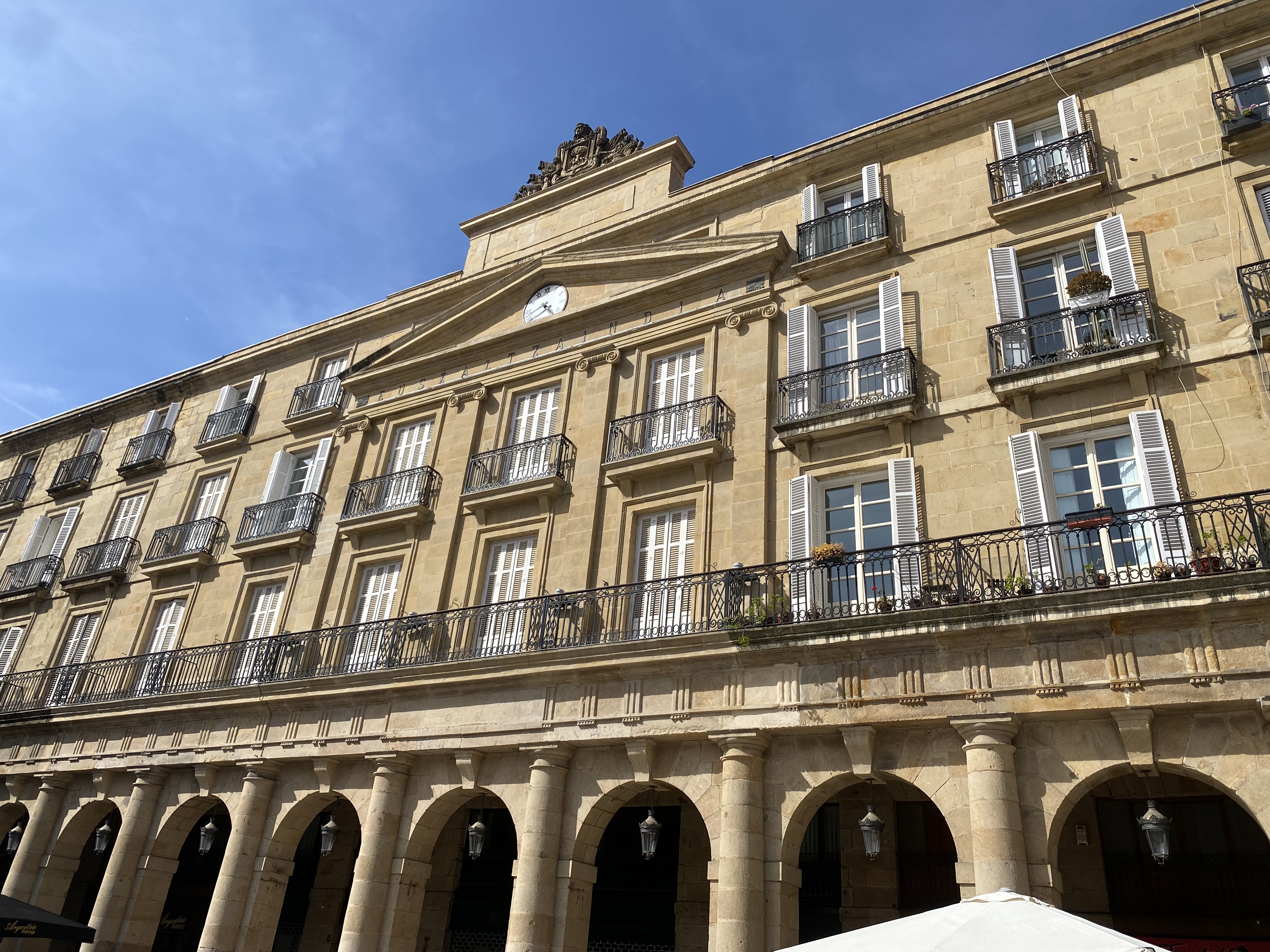
Plaza Nueva

Barcelona

Arenal Kiosk

Valencia
My least favourite part of the Bilbao semester was the structure of the modules: “Researching Human Rights” and “Human Rights Defenders: Context, Policy, and Practice”. In most weeks, we had classes from Monday to Thursday, for four hours in the afternoon/evening: 15:00–19:00. Add the 13:00–14:00 Spanish classes beforehand, and the whole day is essentially gone! Right from my undergrad days at UCL, I wasn’t used to having such long classes and such packed weeks. Even at the Nigerian Law School, our four-hour lectures were in the mornings, from 9:00 to 13:00, so they felt less draining than the later 15:00–19:00 lectures in Bilbao.
Frankly, I may have been slightly burnt out midway through the Bilbao semester (recall that I had just written the Bar exam before starting the programme). The motivation I felt at the start of the Gothenburg semester, when everything was new and exciting, had dwindled. I was sick of the classes, and at some point, I started wondering if I should have gone for a research-based master’s programme, rather than a taught one. In any case, I got through the semester and our final assignments. Living in the beautiful city of Bilbao more than made up for the mental fatigue I was undergoing, so my Bilbao experience ended up being an overall positive one. In June 2023, I left Bilbao and went back to Nigeria for the summer holiday, having had an amazing five months in Spain.
Semester 3: University of Roehampton
Post-summer, I moved to London, UK in September 2023. I was very much ready to get back into life in London, having left in 2020. Unlike with Gothenburg and Bilbao, settling into London was a breeze because I was already used to the system, and there was also no language barrier. I was reminded of how exciting it is to live in London, with its numerous events and attractions. I did some touristy things like visiting Trafalgar Square again, because you can never be too much of a tourist.
Some of my coursemates stayed on campus, whereas others stayed in private accommodation. Because London is such a big city, and it’s difficult to get from one end to the other (especially given Roehampton’s location on the outskirts of London), we didn’t have as many whole-group meet-ups. But there were smaller-group activities, and we all hung out on Mondays, when we had a whole day of classes together. We also had a couple of group dinners together, in line with the tradition we had established in Gothenburg.
With my friends on the programme, I took day trips to Canterbury and Oxford, while also visiting places in London such as Sky Garden and Winter Wonderland. Because London is such a bustling city, there is never want of something interesting to do, and I was often reminded of that. But ultimately, whereas the move to Sweden and Spain brought a sense of excitement and adventure, London brought a sense of stability. Perhaps because I knew I wanted to remain in London after the programme ended; perhaps because I already had family and friends in London. Whatever the case, London felt like home away from home for me.

London

Oxford
In terms of classes, our London modules were “Social Movements and NGOs: Understanding Social Change” and “Theorising Human Rights”. We had a full day of classes – every Monday, from 10:00 to 17:00, with a one-hour break in between. It was draining, but I couldn’t complain, because Monday was our only day of classes. For the other days, we had our assigned readings as well as our internships. A requirement of the course was to get an internship with a human rights organisation (defined loosely), and part of our assessment for the module involved producing a written piece of work in relation to the internship. Overall, I did find the content of the modules in Roehampton to be engaging (even though I was still partly struggling with burnout, so I wasn’t as motivated as I was in Gothenburg). Interestingly, I got my highest grades in the entire programme during the London semester, so that speaks to my level of engagement with the content.
My least favourite part of living in London? The cost of living! What I was paying for a tiny studio in private student accommodation would have gotten me a one- or even two-bedroom apartment elsewhere. What I spent on transport in one day would last me a good week, if not two, in other places. The list goes on. But I already knew that London is an expensive city, so I just had to come to terms with the reality of paying ridiculous prices for essential things.
A bittersweet moment came on our final day of classes in December 2023. Even though we still had assignments due in January, this was the last time we would have classes together, as the next semester would be focused on our dissertations. Not only that, but we would no longer all be in the same location. The programme so far had involved us – the same group of 15 students – travelling from country to country together. Now, we were going to be separated into different countries for the final semester, based on the university in which our dissertation supervisor was located. It was intense and overwhelming, but we at least found comfort in knowing that this was not the final goodbye. We would see each other again for the final symposium come June 2024.
Semester 4: UiT The Artic University of Norway
The dissertation semester began in January 2024. Although the dissertation module was coordinated by UiT The Arctic University of Norway, we did not have to physically be in the university. Students were posted to one of the four countries – Sweden, Spain, UK, and Norway – based on where their supervisor was located. And, in many cases, if your supervisor agreed to online meetings, you did not even have to be in the country at all. You could work on your dissertation from anywhere you wanted.
For me, I remained in London because my supervisor was in the University of Roehampton, but I could have travelled elsewhere since my supervisor and I had online meetings only. I had three other coursemates in London as well, while the remaining were scattered across different countries. As expected, the dissertation semester did not follow a specific structure. We’d already had a few general classes in previous semesters to guide us through the dissertation process, which led us to finalise our research proposals and be allocated supervisors. Now, it was purely up to you and your supervisor to agree on a meeting schedule and feedback mechanism while you conducted your research.
Time flew by quickly during that semester, and following a cheeky trip to Budapest, Hungary, I doubled down on my dissertation. We had freedom to choose our dissertation topic and research methodology, provided our research was related to human rights. After changing my topic a few times, I settled on “Democratisation, Political Inclusion, and Systemic Justice: The Effects of Youth Movements on Social and Political Change in Nigeria”.
The research process was intense. At first, I was pretty sure I knew where I was going. Then, I ended up confusing myself multiple times and almost doubting my sanity. There were times where I wasn’t sure if I would kill the dissertation or it would kill me; luckily, I reached a point where I was certain that the former would be the case. After analysing and re-analysing the data, crafting and revising drafts, and structuring and restructuring the entire paper, I finally handed in my dissertation in the morning of 23 May 2024, having stayed up the entire night before for fear that I would oversleep and miss the deadline. I hit the submit button, and I was finally free! The dissertation module was over. All that was left was the final symposium in June to mark the end of the programme.
The End
The final symposium was held at the University of Deusto in Bilbao, Spain, from 17 to 18 June 2024. During the event, we defended our dissertations, presenting our findings and responding to questions from the discussants, fellow panellists, and members of the audience (which included lecturers and our peers). I appreciated the opportunity to reunite with my cohort, having been split up in the final semester.
One of the best things about the EMHRPP programme is that we all got to travel together as a cohort, unlike some other Erasmus programmes where students only meet in the first semester before dispersing to different countries independently. Our shared experiences in different countries really helped our cohort to form a strong bond. We went through good times and bad times as a collective, and even when we eventually split up in the final semester, the Bilbao symposium allowed us to reunite.
My biggest takeaway for anyone considering the programme is that each semester will be different – and that’s part of the adventure. Personally, I enjoyed the content and structure of the modules most in Gothenburg, the living experience best in Bilbao, and the variety in my weekly schedule most in London. I can’t really say much about Norway because I did not go there in person, but I’ve heard good things from those who did go.
The only downside about the programme was that it activated Rukky the traveller and adventure seeker, such that when I fully settled into life post-graduation, with a full-time job, it felt a bit boring. Take me on another five-month adventure in Bilbao, please! But, in all seriousness, being on this programme changed me in more ways than I could have anticipated. I was simply applying for a master’s programme to increase my academic knowledge and become one degree hotter, but I ended up making amazing friends, creating lifelong memories, experiencing new cultures, and even learning more about myself. I could not be more grateful to have had the opportunity to embark on this transformative two-year adventure.
I can now proudly say that an MA in Human Rights Policy and Practice is officially in the bag, adding to my LLB in Law and my admission to the Nigerian Bar. Is there at least one more degree in store for me? I guess we’ll find out. Until then, onwards, to bigger and greater things!
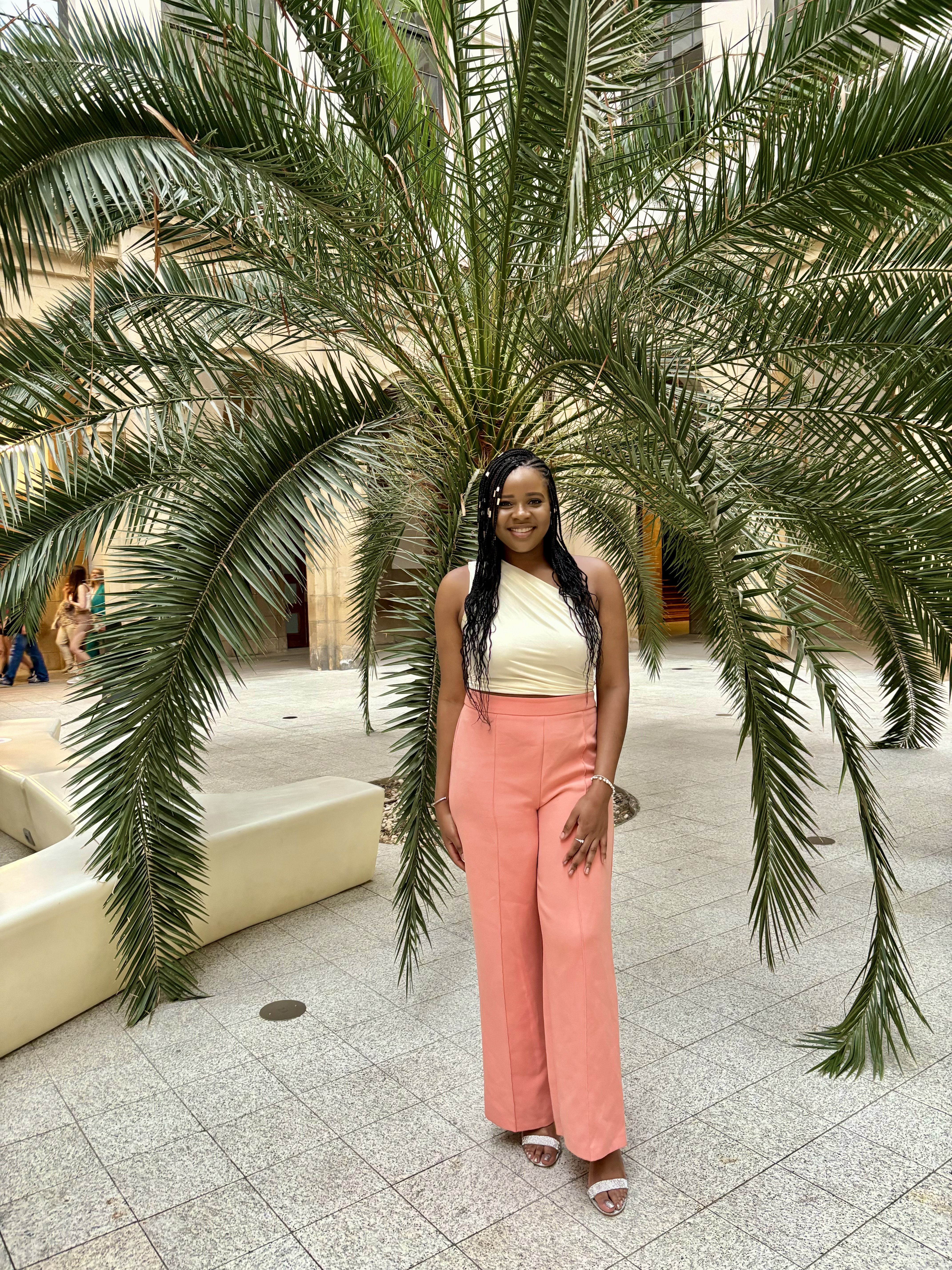
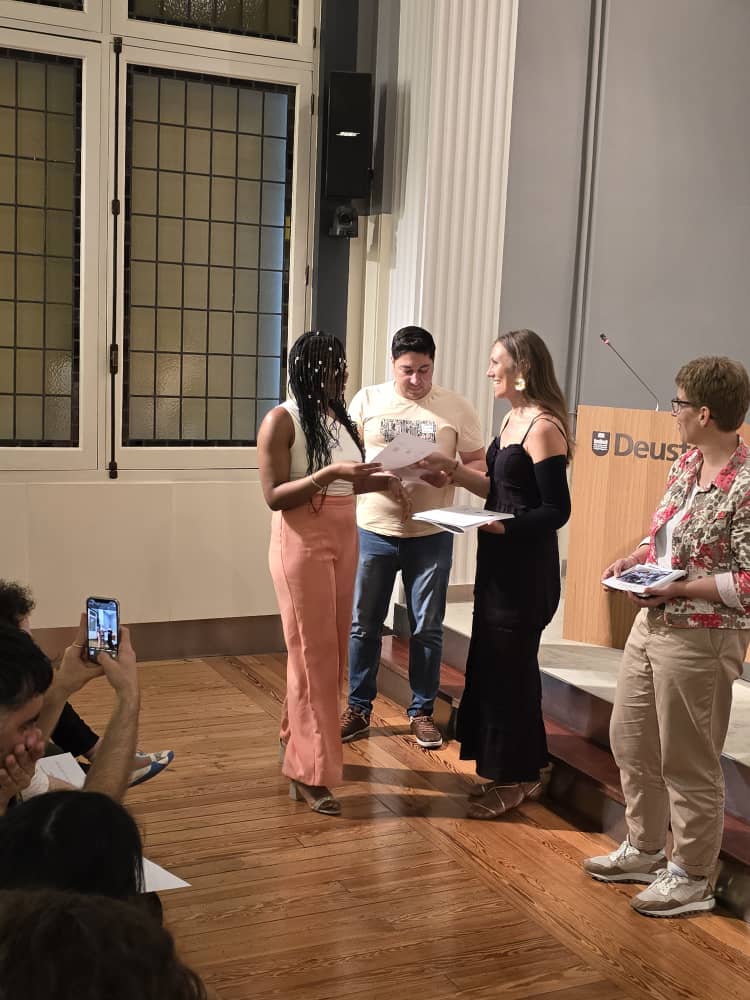
Final symposium in Bilbao
Related: Watch my Erasmus Mundus vlogs on my YouTube channel.
Discover more from KIKI
Subscribe to get the latest posts sent to your email.


May I know your educational background? Grades, experiences, uni to apply to the programme? Thank you!
LikeLiked by 1 person
Hi! You can check my LinkedIn profile here: https://www.linkedin.com/in/rukevwe-otive-igbuzor/.
LikeLike
Awww, congratulations, darling. Wanna be like you when I grow up.
LikeLiked by 1 person
Haha aww thank you!
LikeLike